
Table of Contents
What actually changed in 2026?
Several major shifts are happening at once, and they’re interconnected.
Job board visibility has become competitive and paid-driven. Many platforms have shortened organic visibility windows, limited free exposure, and increased reliance on sponsored distribution. Free visibility is no longer predictable or consistent.
AI has entered the hiring process from both sides. 87% of companies now use AI in some part of their recruitment process (Demand Sage, 2026). Employers are using it to source and screen faster. Candidates are using it to generate resumes and apply to hundreds of roles with minimal effort. 90% of HR managers say their workload has increased because of AI-generated applications, and 23% report receiving more unqualified candidates as a direct result (Fuze HR, 2026).
Skills-based hiring has become the dominant framework. 70% of employers now use skills-based practices, up from 65% the year prior, and 85% of hiring managers evaluate candidates on skills and readiness rather than direct experience (Onrec, 2026).
The labor market has shifted to “low-hire, low-fire.” More than 60% of employers cite talent shortages as a top concern, but hiring is driven by precision, not scale (Staffing Industry Analysts, 2026).
Flexible and fractional work has become mainstream. 59 million Americans now freelance, representing 36% of the U.S. workforce, and 35% of businesses are leveraging fractional executives and contract talent (Indeed Leadership Hub, 2026).
Old vs. New: How Hiring Has Changed in 2026
| What Used to Work | What Works Now | |
|---|---|---|
| Post once, rely on organic traffic | Distribute across 100+ boards simultaneously | |
| Screen by resume and degree | Evaluate via skills assessments and behavioral tools | |
| High-volume, broad hiring | Precision hiring for specific, critical roles | |
| Single job board dependency | Multi-channel sourcing strategy | |
| Manual sourcing | AI-assisted sourcing with human final decisions | |
| Full-time permanent roles only | Mix of full-time, fractional, and contract talent | |
| Respond when convenient | Respond within 24 to 72 hours to protect visibility | |
| Measure total applicants | Measure qualified candidates and cost per hire |
The AI paradox: more applications, fewer signals
One of the most counterintuitive shifts in 2026 is that more applicants has not meant better applicants.
AI tools have made it easy for candidates to apply to hundreds of jobs in a single session, auto-tailoring their resume each time. The result: application volume is up, but signal-to-noise has dropped sharply. Some companies are receiving over 1,200 applications within 48 hours for a single role and hiring no one from that pool. 21% of employers say they struggle to distinguish AI-generated resumes from authentic ones, and 76% report being ghosted by candidates who applied to so many roles simultaneously they lost track or accepted something faster (CPA Practice Advisor, 2026).
Structured screening is now non-negotiable. Pre-built screening questions, must-have qualifiers, DISC+ behavioral assessments, and automated phone screening help you cut through the noise and identify candidates who are genuinely ready, before investing hours in review.
The bottom line: Raw application volume is no longer a useful metric. What matters is how efficiently you can identify qualified candidates and move them forward.

Visibility and responsiveness: two sides of the same problem
On most major hiring platforms, posting a job and waiting for steady applicant flow is no longer a reliable strategy. Platforms have shortened organic visibility windows, tightened distribution requirements, and increased reliance on sponsored placements. But even paid visibility isn’t a simple lever anymore.
Most platforms now evaluate job performance dynamically in the first 24 to 72 hours. They’re watching whether candidates are clicking, applying, and whether you’re responding and moving people forward. Strong early signals keep your job visible. Weak ones reduce distribution, even mid-campaign. Visibility decays over time based on performance, not just budget.
The same urgency applies on the candidate side. One in four job seekers have ghosted an employer during the hiring process, and slow communication is a leading cause (CPA Practice Advisor, 2026). In a market where strong candidates are applying to multiple roles at once, the employer who responds first often wins.
Distributing across 100+ job boards simultaneously protects you from any single platform’s algorithm shifts. Pairing that with a universal inbox, SMS texting, and calendar integration for scheduling interviews, makes it possible to stay responsive without it consuming your day.
Set a rule to review new applicants within 24 hours of posting. That first-day engagement is one of the strongest signals you can send to both the platform and the candidate.
Skills over credentials: how evaluation is changing
The shift away from resumes and degrees is happening across employer sizes and industries (Fast Company, 2026). 70% of employers now use skills-based practices, which in practice means:
- Work samples and assessments supplementing or replacing resume reviews
- Structured interviews with consistent scoring criteria
- Behavioral assessments to evaluate soft skills alongside technical ability
- Reduced or eliminated degree requirements where demonstrated capability matters more
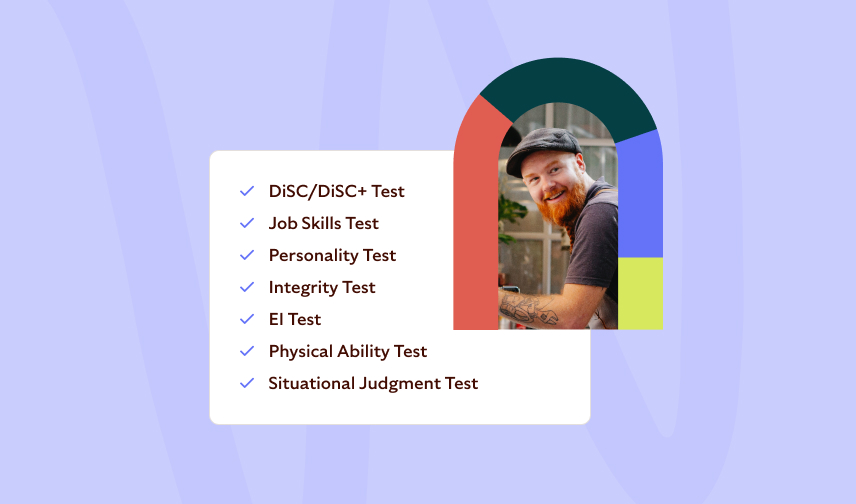
DISC+ behavioral assessment, built into every Wizehire plan, is one of the most direct ways to apply this framework. Rather than predicting performance from a resume, DISC+ gives you insight into how a candidate thinks, communicates, and operates under pressure. Combined with structured interview guides and targeted screening questions, you get a more reliable picture before investing time in a conversation.
This shift also expands your accessible talent pool. When you evaluate for skills rather than credentials, candidates filtered out by traditional requirements can be assessed on their actual ability to do the job.
The rise of flexible workforce models
Not every role needs to be full-time and permanent. 77% of business leaders who have adopted fractional models say they did so to access world-class expertise without the cost of a full-time hire (Indeed Leadership Hub, 2026). Temp-to-hire arrangements are growing as companies want to evaluate fit before committing, and for specialized functions, fractional leadership has become a legitimate long-term strategy.
Building and maintaining a talent pool of qualified candidates, even ones you’re not ready to hire today, gives you a head start when a new need opens up. Referral programs and nurture campaigns help you build that pipeline before the urgency hits.
What employers should do now
The employers seeing the most consistent results in 2026 aren’t doing one thing differently. They’re doing all of these things together.
1. Diversify your candidate sources. Don’t depend on one platform. Stability comes from reach across multiple job boards, AI results, your career page, referrals, and industry-specific channels, not depth on one source.
2. Make every post work harder. Clear job titles, specific responsibilities, transparent compensation, and straightforward language all improve conversion and algorithmic performance. Templated job posts take the guesswork out.
3. Add structured screening. Screening questions, behavioral assessments, and automated phone screens help you move past the AI-generated application flood and surface genuinely qualified candidates. A smaller, better pool almost always outperforms a large, noisy one.
4. Respond fast. Review applicants, reply to messages, and move candidates forward within the first 24 to 72 hours. Text messaging, a centralized inbox, and mobile access make this manageable without adding overhead.
5. Measure quality, not volume. Track qualified candidates, interview rates, and cost per hire. In an environment where AI is inflating application counts, total applicants is a misleading number.
6. Consider your workforce mix. Some roles are better served by fractional, contract, or temp-to-hire arrangements. Build your talent pool now, before you urgently need it.
7. Build a repeatable system. Email templates, interview guides, hiring checklists, and coaching support help you move faster and more consistently when a new need opens, whether that’s one role or ten.
How Wizehire helps
Wizehire is built to help employers hire with more speed and precision in a market that demands both.
Sourcing: Automatic distribution to 100+ job boards, sponsored campaign options, custom career pages, QR codes for in-person applicants, and Candidate Forecast and Job Health tools to monitor post performance in real time.
Screening: Pre-built and customizable screening questions, must-have qualifiers, DISC+ behavioral assessment, automated phone screening, and structured interview guides to keep evaluation consistent.
Speed and engagement: Universal Inbox, SMS texting, calendar integration, mobile app, Scout (our AI recruiting agent) next-best-action recommendations, and daily Scout Reports to keep your pipeline moving.
Growth and Concierge plans: Campaign tools, employee referral programs, flex market capabilities, advanced reporting, Strategic Relationship Manager, Implementation Manager, and payroll/HRIS integrations with QuickBooks, Gusto, ADP, Paychex, Paycor, and Paylocity. Growth is now available self-serve, no sales call required, at $449/month billed annually or $549/month month-to-month.
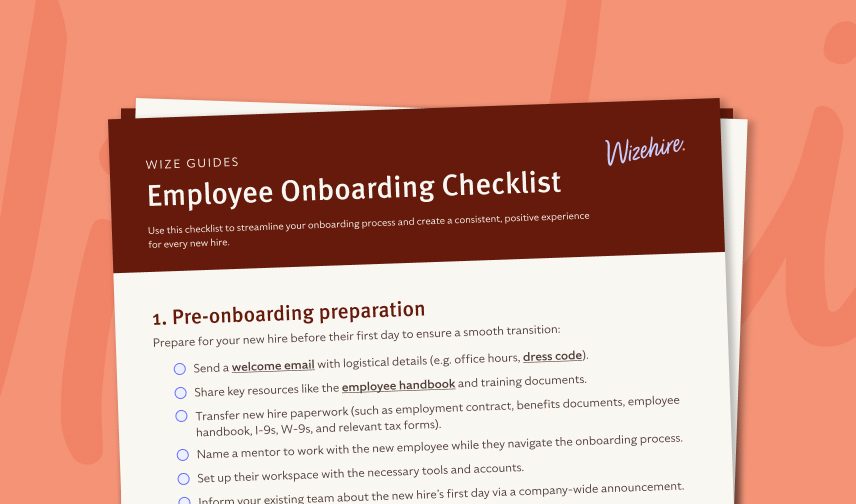
Onboarding and beyond: Hiring checklists, e-sign offer letters via DocuSign, and WOTC tax credit detection for a smooth handoff from candidate to employee.
Every plan includes coaching sessions and access to Wizehire’s Coaches, so you have the structure and support to hire consistently, even when conditions change.
Frequently asked questions
Why are my job posts getting fewer applicants in 2026?
Most platforms have shortened organic visibility windows and reduced free distribution. Jobs now have to earn and maintain visibility through early engagement, multi-channel distribution, and strong post quality.
Does skills-based hiring work for smaller employers?
Yes. 70% of employers using skills-based practices report better candidate quality and a wider talent pool. Tools like DISC+ and structured interview guides make it practical without a dedicated recruiting team.
How do I handle AI-generated resumes flooding my pipeline?
Structured screening is the most effective filter. Must-have qualifier questions, behavioral assessments, and automated phone screens help you identify genuinely qualified candidates before investing significant review time.
Is sponsoring job posts still worth it?
Yes, but strategy matters. Fast engagement in the first 24 to 72 hours and tracking Job Health data make sponsored campaigns significantly more effective.
What’s the fastest way to reduce candidate ghosting?
Speed of communication. Candidates applying to multiple roles will engage with whoever responds first. SMS texting, a centralized inbox, and mobile access all reduce the response window that leads to ghosting.
Should I consider fractional or contract hires?
For specialized roles or situations where you want to evaluate fit before committing, yes. 77% of business leaders using fractional talent say it gives them access to expertise they couldn’t otherwise afford full-time.
For More Information
Author

Share



 See How It Works