Table of Contents
Artificial intelligence is rapidly changing how businesses hire, communicate, and make decisions.
But technology doesn’t replace leadership. If anything, it raises the bar.
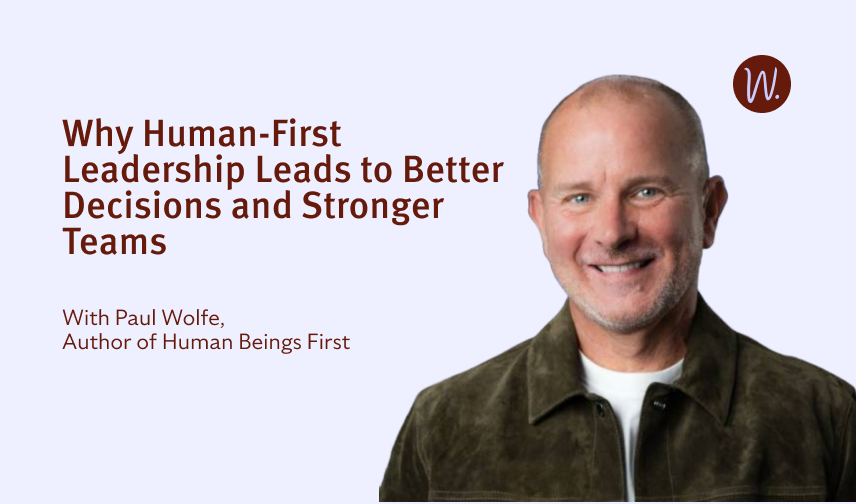
In a recent Wizehire fireside chat, VP of Marketing, Carmen Bryant, sat down with Paul Wolfe, author of Human Beings First and former HR executive at companies including Indeed, Condé Nast, and Match.com. Their conversation explored what leadership looks like as technology accelerates, but people still need trust, clarity, and support.
The takeaway was simple but powerful:
Great organizations put human beings first.
Here are the leadership lessons Paul shared, and how business leaders can apply them today.
Leadership Starts With Seeing the Whole Person
During the pandemic, many leaders experienced a shift in how they saw their teams.
Video calls suddenly revealed more of people’s lives: homes, families, children, and everyday interruptions. For many leaders, it was the first time work and life were visible in the same space.
That moment reinforced something Paul believes strongly:
Employees are not just roles or job titles. They are human beings with responsibilities, pressures, and aspirations outside work.
Leaders who recognize this build stronger relationships and more resilient teams.
What this means for leaders
- Take time to understand what employees are navigating outside work.
- Ask questions and listen before jumping to conclusions.
- Create space for honest conversations.
When people feel seen and understood, trust grows.

“Empathy doesn’t mean lowering expectations. It means understanding what people are navigating so you can lead them more effectively.”
– Paul Wolfe, Author of Human Beings First – Practices for Empathetic, Expressive Leadership (2023).
Empathy and Accountability Go Hand in Hand
One of the most common misconceptions about human-first leadership is that it means avoiding hard conversations.
Paul disagrees.
Strong leaders combine empathy with accountability. Empathy helps leaders understand context. Accountability ensures teams stay focused on results.
When leaders balance both, they create an environment where people can improve instead of feeling judged or dismissed.
What this means for leaders
- Address performance issues early.
- Be clear about expectations.
- Approach difficult conversations with curiosity instead of blame.
Direct communication builds confidence and clarity for everyone involved.
Difficult Conversations Are a Leadership Responsibility
Every leader faces moments that are uncomfortable: Performance concerns, organizational change, hard feedback, tough decisions. Avoiding these moments doesn’t protect teams. It creates confusion and frustration.
Paul emphasizes that the most effective leaders approach difficult conversations with honesty and respect. They focus on helping people grow rather than simply pointing out problems.
What this means for leaders
- Prepare for tough conversations in advance.
- Focus on behaviors and outcomes, not personal criticism.
- Offer clear guidance on how employees can improve.
Handled well, these conversations strengthen teams rather than damage them.
Culture Is Built Through Everyday Leadership
Many companies spend time defining mission statements and company values. But culture isn’t created by words alone. It’s shaped by what leaders do every day.
Employees pay attention to how leaders communicate, make decisions, handle challenges, and treat people during difficult moments. Over time, these behaviors become the culture of the organization.
What this means for leaders
- Model the behaviors you want to see in your team.
- Be consistent in how you treat people across situations.
- Reinforce the values you want your organization to embody.
Culture grows from leadership actions, not leadership slogans.
AI Is Changing Work, but Leadership Is Still Human
AI tools are helping organizations move faster and make more informed decisions. From recruiting technology to workflow automation, these tools are transforming how businesses operate.
But technology alone doesn’t build great teams.
Human judgment, empathy, and trust remain essential.
Paul believes the future of work will belong to organizations that combine smart technology with human-centered leadership.
Technology should support people, not replace them.
What this means for leaders
- Use AI to remove repetitive work and improve efficiency.
- Keep decision-making grounded in human judgment.
- Focus on building trust and clarity across teams.
The most effective leaders will know how to balance both.
The Bottom Line: Human-First Leadership Builds Stronger Teams
The pace of change in today’s workplace can feel overwhelming. New technologies emerge constantly, and expectations around leadership continue to evolve. But the foundation of great leadership hasn’t changed.
People want:
- clear expectations
- honest communication
- respect and empathy
- opportunities to grow
Leaders who put human beings first create organizations where people can do their best work.
And in a world where technology continues to advance, that human connection matters more than ever.
Find your people


Wize Words
Leadership will always involve difficult moments, tough feedback, performance conversations, and hard decisions. Human-first leaders don’t avoid those moments. They approach them with empathy, clarity, and respect. When people understand expectations and feel supported, they’re far more likely to grow and succeed. The strongest teams are built where accountability and humanity go hand in hand.
Author

Share





 See How It Works